
Find the right plant.
Grow it with confidence.
Explore clear, practical information about flowers and plants — from names and growing needs to care and common problems.
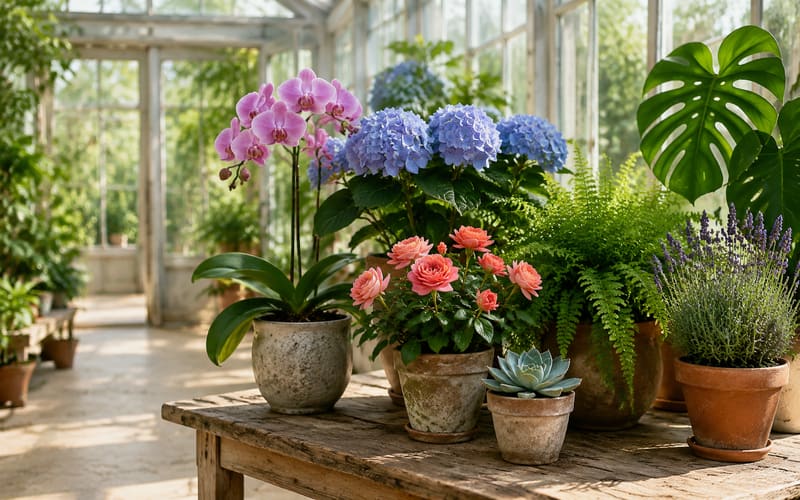
Explore plants from home, garden, and landscape
Browse the plant encyclopedia
View all plants →Featured plant profiles
Start with our growing collection of detailed plant profiles.
 Plant profile
Heartleaf Philodendron
Philodendron hederaceum- Light
- filtered or indirect light; weak light produces longer internodes and smaller leaves
- Water
- water after appropriate upper-zone drying, then drain fully
 Plant profile
Chinese Evergreen
Aglaonema spp.- Light
- filtered or indirect light; highly variegated cultivars generally need more usable light
- Water
- water after appropriate upper-zone drying, then drain fully
 Plant profile
Fiddle Leaf Fig
Ficus lyrata- Light
- bright filtered or indirect light
- Water
- water after the upper root zone dries, then drain fully
 Plant profile
Rubber Plant
Ficus elastica- Light
- bright filtered or indirect light
- Water
- water after the upper root zone dries, then drain fully
 Plant profile
ZZ Plant
Zamioculcas zamiifolia- Light
- bright indirect light for stronger growth; tolerates lower light
- Water
- allow substantial dry-down before thorough watering
 Plant profile
Spider Plant
Chlorophytum comosum- Light
- bright indirect light; tolerates lower light but protect from hot direct sun
- Water
- allow the mix to dry slightly between thorough waterings
Explore collections
Published pathways through real plant groups and shared growing needs.
Compare dry-down, storage structures, light needs, and growth form across Snake Plant, ZZ Plant, Aloe Vera, Jade Plant, and Ponytail Palm.
Explore the light, watering, and propagation traits that define easy vining indoor plants, using Pothos as the documented reference profile.
Compare beginner-friendly tropical indoor plants, their care similarities, and the best fit for your indoor conditions.
Common plant problems
Recognize the symptom, understand the cause, and learn what to do next.
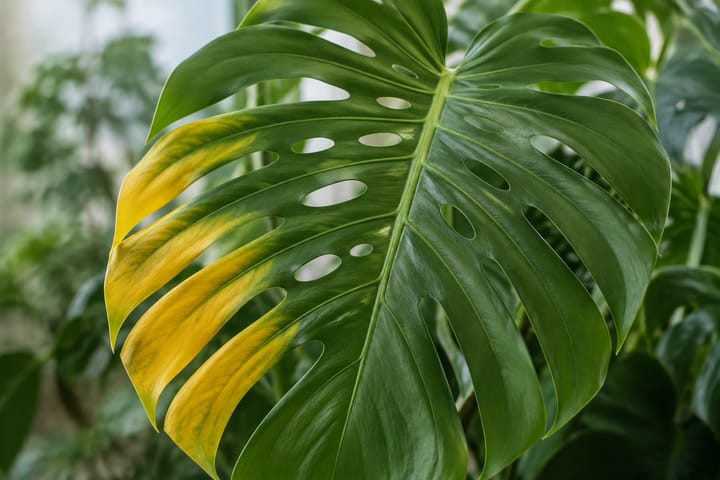
Essential Monstera care
Focused guidance for watering, feeding, humidity, and light.
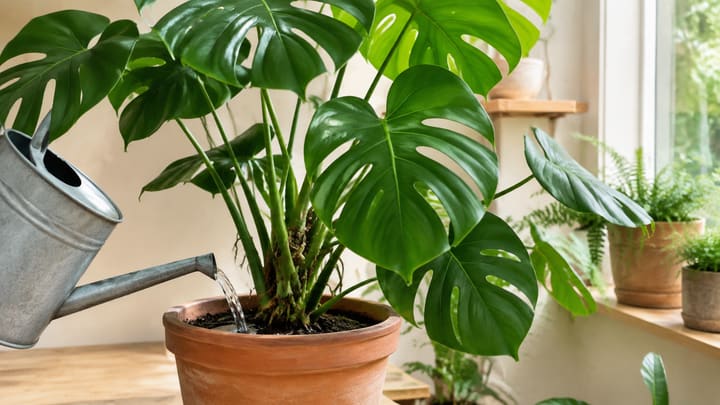
How to Water a Monstera
Learn a moisture-based Monstera watering method, signs of overwatering and underwatering, seasonal adjustments, and practical prevention tips.
Read guide →African Violet Fertilizer for Growth Without Salt Injury
Feed a rooted, actively growing African Violet at the product label rate, and stop when roots are stressed or salts accumulate on mix and pot rims.
African Violet Humidity Without Wet Flowers or Stagnant Air
Support African Violet with moderate humidity and air exchange while keeping fuzzy leaves, flowers, crown, and roots free from prolonged wetness.
African Violet Light Requirements for a Compact Blooming Rosette
Give African Violet abundant gentle indirect light, protect fuzzy leaves from harsh sun, and read placement from rosette symmetry, petiole length, and flowering.
African Violet Care Guide: A Complete Rosette, Root, and Bloom System
Coordinate African Violet light, moisture, soil, warmth, humidity, feeding, repotting, deadheading, propagation, and flowering through the whole year.
Read guide →From the plant library
Plant profileIdentify African Violet by its compact rosette, fuzzy rounded leaves, and flower clusters, then coordinate gentle light, room-temperature water, airy soil, warmth, and clean crown care.
Diagnose brown African Violet tissue by mapping crisp window-side scorch, pot-rim petiole injury, dry margins, and fertilizer residue.
Feed a rooted, actively growing African Violet at the product label rate, and stop when roots are stressed or salts accumulate on mix and pot rims.
Coordinate African Violet light, moisture, soil, warmth, humidity, feeding, repotting, deadheading, propagation, and flowering through the whole year.